

Humidity Problems in House: Causes and Fixes
A home can feel cool at 74 degrees and still feel sticky, smell musty, or leave condensation on windows. Those are not small comfort issues in Jupiter and Palm Beach County. Humidity problems in house can put extra strain on your air conditioner, encourage mold growth, and make the air feel unhealthy long before you see a major problem.
South Florida homes deal with moisture nearly year-round, especially during long humid seasons and afternoon storms. The goal is not to eliminate humidity completely. Your home needs some moisture in the air. The goal is to keep indoor relative humidity in a comfortable, controlled range - generally around 40% to 60%, with many homeowners feeling best near the middle of that range.
Signs Your House Has Too Much Humidity
The first sign is often how the house feels. If rooms feel clammy even while the AC is running, or bedding and towels never seem to dry properly, the system may not be removing enough moisture from the air.
Other warning signs deserve attention: condensation on windows or supply vents, peeling paint, warped wood trim, recurring mildew in bathrooms, musty closets, and visible mold spots. You may also notice that the thermostat says the temperature is fine, but family members still turn the setting lower because the home feels warm and damp.
That response can drive up energy use without solving the real issue. Air conditioning is supposed to cool your home and remove moisture. When humidity remains high, there is usually a reason worth finding.
What Causes Humidity Problems in a House?
Excess indoor moisture can come from outside air, household activities, water leaks, or an HVAC system that is not operating as it should. In coastal South Florida, it is common for more than one factor to be involved.
An Air Conditioner That Is Not Dehumidifying Properly
Your AC system removes humidity as warm indoor air passes over the cold evaporator coil. Moisture condenses on the coil and drains away through the condensate system. If the equipment is oversized, it can cool the home too quickly and shut off before it has run long enough to remove sufficient moisture.
This is one reason bigger is not always better when choosing a new air conditioner. Proper sizing depends on the home, insulation, windows, layout, ductwork, and local climate. A system that is too small can struggle to cool. A system that is too large can leave the home cool but clammy.
Maintenance issues can create similar symptoms. A dirty air filter, restricted airflow, a clogged condensate drain, dirty coil, refrigerant issue, or blower setting problem can reduce moisture removal. Regular service helps catch these concerns before they turn into comfort problems or water damage.
Outside Air Is Getting In
Florida humidity will find its way through gaps around doors, windows, attic access points, plumbing penetrations, and poorly sealed ducts. Each small opening may not seem serious, but together they can introduce a steady supply of moist outdoor air.
Duct leaks are especially important. Leaky return ducts can pull hot, humid attic or garage air into the system, then distribute it through the home. Leaks on supply ducts can waste conditioned air in unconditioned areas and make the AC work harder. A professional evaluation can identify whether duct condition is contributing to the problem.
Everyday Moisture Has Nowhere to Go
Showers, cooking, laundry, and even large gatherings add moisture indoors. Normally, a properly working HVAC system and correctly vented exhaust fans can handle routine household moisture. Trouble starts when bathroom fans are weak or unused, kitchen ventilation is inadequate, or the home is kept closed up while the AC runs too little.
This is also why humidity may be worse in certain rooms. A bathroom without effective exhaust, a laundry room, or a back bedroom with poor airflow can have a different moisture level than the rest of the house.
A Plumbing, Roof, or Building Leak
High humidity is not always an air conditioning issue. A slow leak behind a wall, under a sink, around a window, or near the roofline can create a persistent damp area that leads to odors and mold. If humidity concerns are concentrated in one location, or you see stains, soft drywall, bubbling paint, or unexplained water, investigate for a moisture source right away.
Why High Indoor Humidity Should Not Wait
A damp home is uncomfortable, but the bigger concern is what ongoing moisture can do over time. Mold and mildew thrive in damp conditions. Wood flooring, cabinets, furniture, and drywall can absorb moisture, swell, or deteriorate. Dust mites also tend to do better in higher humidity, which can be frustrating for family members with allergies or respiratory sensitivities.
Your cooling equipment pays a price as well. When indoor air holds more moisture, the AC has to work longer to reach a comfortable condition. That can mean higher utility bills, more wear on system components, and more calls for repair during the hottest part of the year.
For seasonal residents, humidity control is particularly important. A home sitting closed for weeks with a poorly operating AC can develop musty odors or moisture damage before anyone returns. Setting the thermostat too high to save energy may backfire if the system no longer runs enough to control humidity.
Practical Steps You Can Take Today
Start by checking your thermostat and, if possible, using a separate indoor hygrometer. These inexpensive devices give you a clearer picture of relative humidity than temperature alone. If readings regularly stay above 60%, document when it happens - all day, only after rain, or only in certain rooms.
Replace a dirty air filter with the correct size and type for your system. A clogged filter limits airflow and can affect both cooling and dehumidification. If your home uses a hard-to-find filter size, custom-made filters can help keep the system protected without forcing an improper fit.
Run bathroom exhaust fans during showers and for about 20 minutes afterward. Use kitchen ventilation while cooking, and make sure clothes dryers vent outdoors rather than into a garage, attic, or interior space. Keep windows and exterior doors closed while the AC is operating, particularly during humid weather.
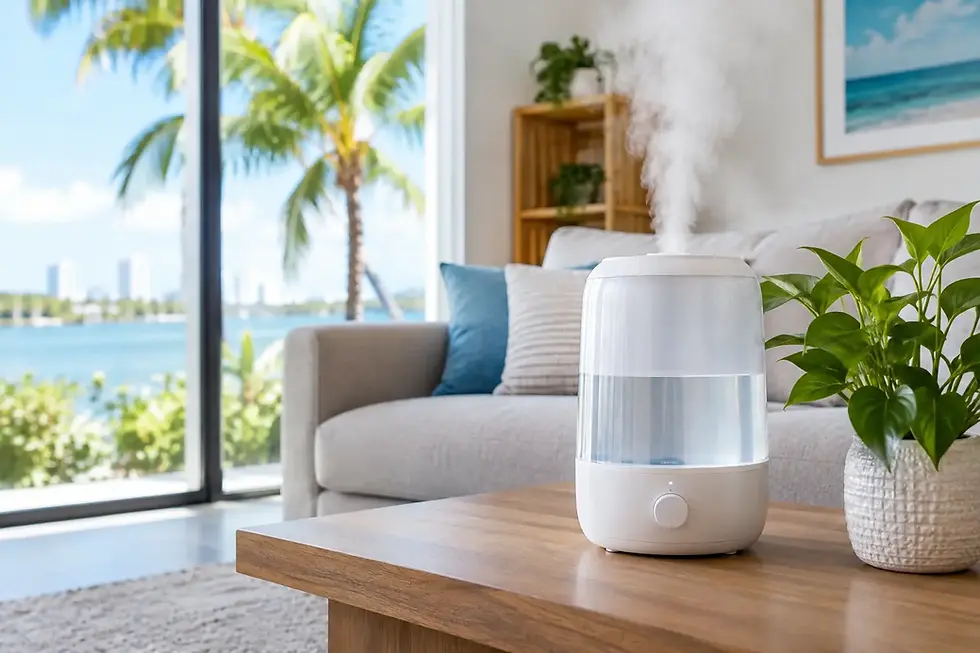
A portable dehumidifier can help in a small, isolated area, such as a closet or guest room, but it is not always the best whole-home answer. These units need emptying or drainage, add heat to the room, and can mask an underlying HVAC or building issue. If several rooms feel damp, the source needs a closer look.
When to Call an HVAC Professional
Call for service if your AC runs but the house remains sticky, humidity stays above 60%, vents sweat, water backs up near the indoor unit, or musty odors keep returning. These symptoms can point to drainage, airflow, duct, equipment-sizing, or system-performance issues that should be diagnosed rather than guessed at.
A qualified technician can check how the system is cooling and draining, inspect filters and coils, evaluate airflow, and look for signs that duct leakage or incorrect equipment sizing is affecting comfort. Depending on the home, solutions may include a repair, maintenance, improved filtration, duct work, thermostat adjustments, or a dedicated whole-home dehumidification strategy.
For homes in Jupiter, Singer Island, The Palm Beaches, and nearby communities, Complete Environmental Solutions can help homeowners get to the cause of persistent moisture concerns. Clear answers matter when your home's comfort, air quality, and protection are on the line.
Do not wait for a musty smell to become visible mold or a small drainage issue to become water damage. A home that feels dry, cool, and comfortable is easier on your family and your air conditioning system - and it starts with finding the source of the moisture.


Comments