

Dehumidifier vs Air Conditioner: Which Is Better?
A thermostat can read 74 degrees and your home can still feel sticky, smell musty, or leave you waking up uncomfortable at night. That is a common South Florida problem, especially during a wet Jupiter summer. When comparing a dehumidifier vs air conditioner, the right choice depends on whether your main issue is heat, excess moisture, or a cooling system that is no longer doing both jobs well.
Your air conditioner should remove a meaningful amount of humidity as it cools the home. But it is not designed to solve every moisture problem. A dedicated dehumidifier can make rooms feel more comfortable without lowering the thermostat, while an air conditioner remains the essential system for removing heat. Understanding the difference can help you avoid buying the wrong equipment and address the real source of the problem.
What an air conditioner does
An air conditioner moves heat out of your home. As warm indoor air passes over the system's cold evaporator coil, moisture in that air condenses and drains away. This is why a properly operating AC system cools and dehumidifies at the same time.
For most homes in Palm Beach County, the air conditioner is the first line of defense against indoor humidity. When the system runs long enough and is correctly sized, it can keep indoor relative humidity in a comfortable range while maintaining the temperature your family prefers.
The key phrase is “runs long enough.” Air conditioning removes moisture during the cooling cycle. If the system reaches the thermostat setting quickly and shuts off, it may not run long enough to pull out adequate moisture. This can happen with an oversized unit, a thermostat set too high during humid weather, or a system with airflow, drainage, refrigerant, or maintenance issues.
When your AC is likely the better answer
Choose air conditioning service, repair, or replacement when the house is genuinely too warm, the AC is running but not cooling, or multiple rooms are uncomfortable. A dehumidifier cannot replace an air conditioner in Florida because it does not remove heat from the house. In fact, portable dehumidifiers produce a small amount of heat as they operate.
If your AC struggles to maintain temperature, blows warm air, freezes up, leaks water, short-cycles, or has rising utility costs, the problem deserves professional attention. Adding a dehumidifier may ease the sticky feeling, but it can hide a cooling problem that will only become more expensive or disruptive later.
What a dehumidifier does
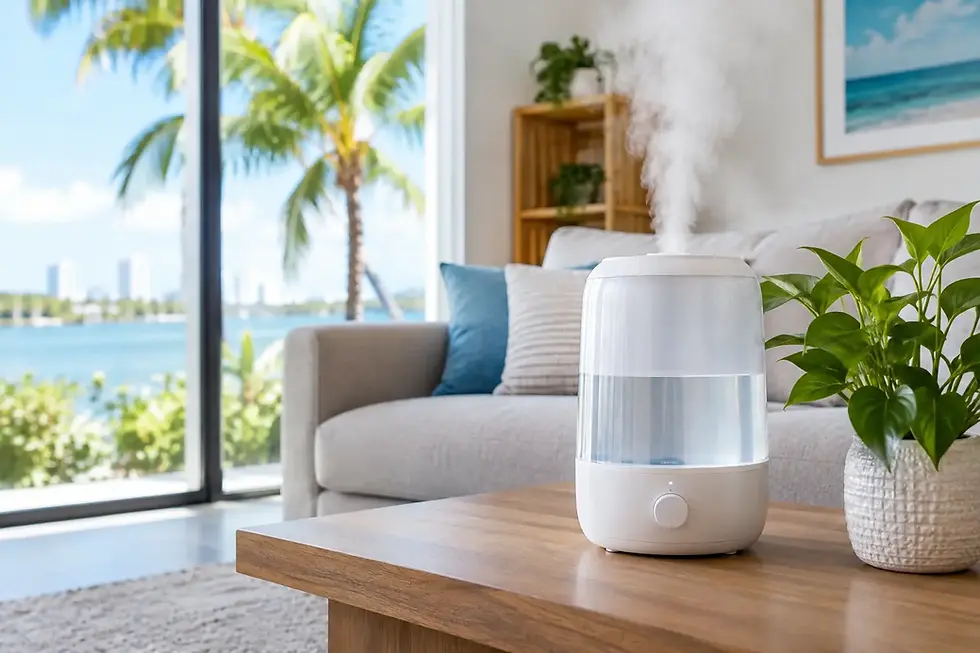
A dehumidifier is built to remove water vapor from the air. It pulls humid air across a cold coil, collects the resulting condensation, and returns drier air to the room or home. Its job is moisture control, not cooling.
Portable units work well for limited areas, such as a guest room, closet, garage, laundry area, or a room that stays damp after storms. They are practical for a contained problem, provided you can empty the collection bucket or set up a reliable drain.
A whole-home dehumidifier is connected to the HVAC system and treats the air throughout the home. It can be especially helpful for homes with high humidity even when the thermostat is satisfied, families who want to keep the house comfortable at a slightly higher temperature, or properties that are closed up for part of the year.
Unlike a portable unit, a whole-home system can drain automatically and is sized around the home’s moisture load. Proper installation matters. The unit, drainage, duct connection, and controls need to work with the existing HVAC system rather than compete with it.
Dehumidifier vs air conditioner: the practical difference
The simplest way to think about the choice is this: an air conditioner controls temperature and removes some moisture; a dehumidifier controls moisture and adds a small amount of heat. One is not automatically better than the other.
If the indoor temperature is 80 degrees, your air conditioner needs to be the priority. If the temperature is comfortable but the air feels clammy, windows sweat, towels do not dry, or a musty odor keeps returning, a dehumidifier may be the missing piece.
In many South Florida homes, the best answer is both. The air conditioner carries the cooling load. The dehumidifier manages moisture during rainy weather, mild days, and times when the AC does not need to run much. This approach can make the home feel better without forcing the thermostat lower simply to get relief from humidity.
That said, a dedicated dehumidifier should not become a workaround for neglected air conditioning. Before adding equipment, it is wise to confirm that the AC is draining properly, the filter is clean and correctly sized, airflow is balanced, and the system is not oversized or short-cycling.
Signs humidity is too high in your home
Indoor humidity is not always obvious until it starts causing damage or discomfort. A small digital hygrometer can give you a useful baseline. Many homeowners aim for a relative humidity level around 45% to 55%. Consistently higher readings can support mold growth and make a home feel warmer than it is.
Watch for several signs happening together: condensation on windows or supply vents, a persistent musty smell, damp-feeling bedding, peeling paint, warped wood, visible mildew, or rooms that feel sticky even when they are cool. Allergy or asthma symptoms can also feel worse when indoor air is humid and musty, although those symptoms have many possible causes.
Humidity can enter through everyday activity, outdoor air leaks, poorly insulated ducts, a crawlspace or garage, roof and plumbing leaks, and frequent door openings. Coastal weather adds another challenge. The goal is not to make your home overly dry. It is to keep moisture at a healthy, manageable level.
Why lowering the thermostat is not always the answer
When the house feels humid, it is tempting to turn the thermostat down several degrees. That may make you feel better temporarily because the AC runs longer and removes more moisture. It also increases cooling costs and can place more strain on an aging system.
A whole-home dehumidifier can sometimes allow a family to keep the thermostat a bit higher while maintaining the same comfort level. Drier air helps perspiration evaporate more effectively, so 76 degrees with controlled humidity can feel far more comfortable than 73 degrees with damp air.
This is not a promise of savings in every home. A dehumidifier uses electricity, and results depend on your home’s size, insulation, ductwork, occupancy, and moisture sources. The benefit is better control: your cooling system can focus on heat while the dehumidifier handles excess moisture.
Start with the cause, not the equipment
A good moisture solution begins with an honest assessment. If a single bathroom or closet stays damp, a portable unit and better ventilation may be enough. If the whole house feels humid, the AC system, air distribution, drainage, filtration, and building envelope should be evaluated together.
For example, a clogged condensate drain can create water problems but does not necessarily explain high humidity. An oversized AC can cool quickly but leave moisture behind. A dirty filter or restricted return can reduce airflow and affect performance. These are different problems, and each calls for a different fix.
Complete Environmental Solutions helps homeowners in Jupiter, The Palm Beaches, Singer Island, and nearby communities look beyond the thermostat when comfort is not where it should be. A clear evaluation can determine whether your home needs AC service, improved filtration, humidity control, or a combination of solutions.
If your home feels cool but never truly comfortable, do not settle for sticky air or a recurring musty smell. Checking humidity and having the system inspected can give your family a more comfortable, healthier-feeling place to come home to.


Comments