
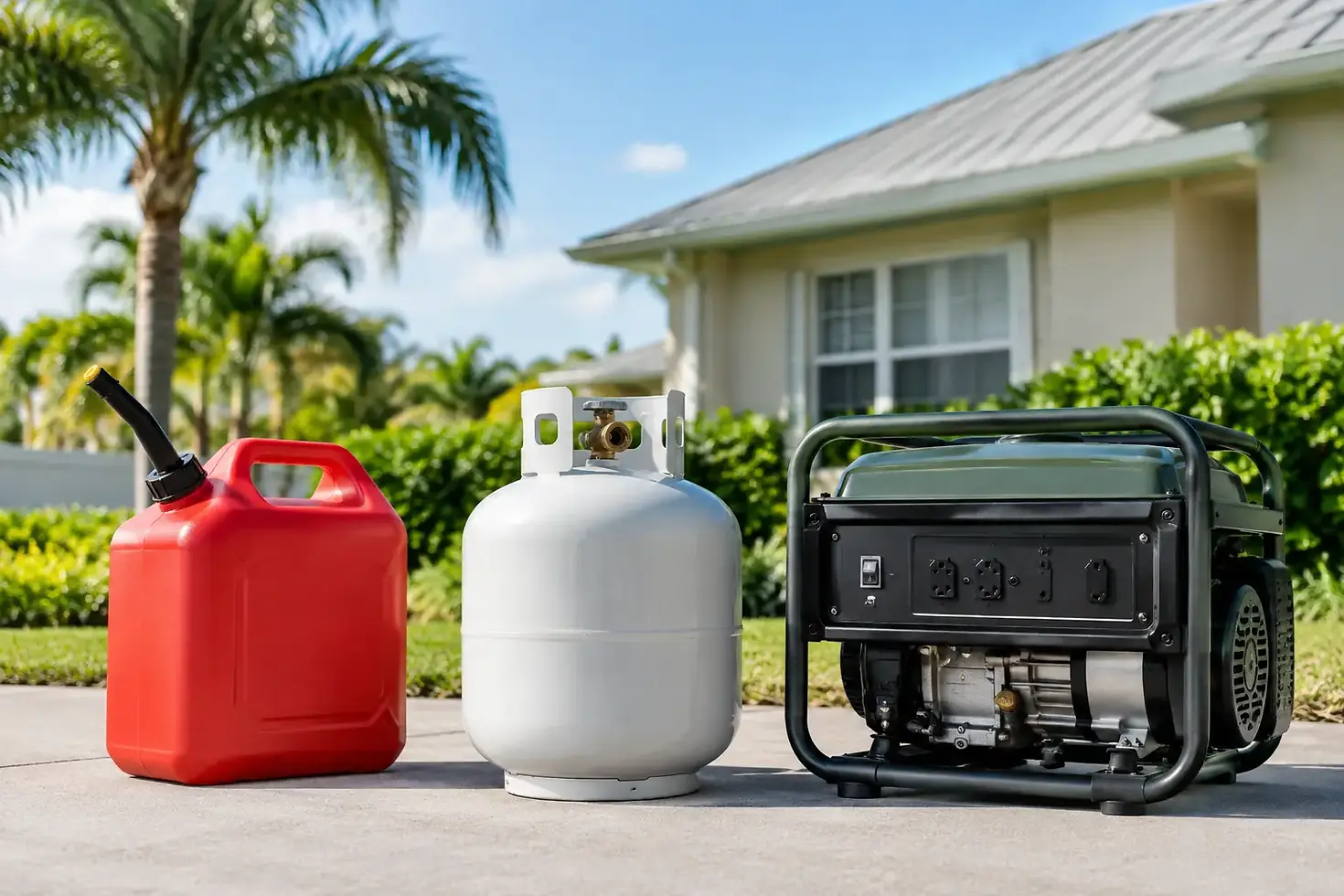
Generator Fuel Comparison for Florida Homes
A hurricane watch is not the time to wonder whether your generator has enough fuel to keep the refrigerator cold, the air moving, and essential medical equipment running. A practical generator fuel comparison helps South Florida homeowners choose a backup power system that fits their home, outage risks, and comfort priorities before the lights go out.
The right fuel is not simply the least expensive one. It affects how long your generator can run, how much maintenance it needs, where fuel is stored, and whether the system can power selected essentials or much of your home. For homeowners in Jupiter, The Palm Beaches, Singer Island, and nearby communities, the best choice often comes down to natural gas or propane for a permanently installed standby generator. Still, every option has a place.
Generator Fuel Comparison: Start With Your Outage Plan
Before comparing fuels, decide what you need the generator to do. Some households only want to keep the refrigerator, lights, Wi-Fi, garage door, and a few outlets operating. Others want enough capacity to run central air conditioning, well equipment, pool circulation, security systems, and major appliances during a multi-day outage.
That difference changes everything. A small portable generator can support a limited number of essential circuits, while a properly sized standby generator can start automatically when utility power fails. Fuel supply must match that level of protection. A system that runs for a few hours is very different from one intended to support your family through an extended storm-related outage.
It also pays to think about the conditions around your property. Flood exposure, space for a fuel tank, access for fuel deliveries, local utility service, and the location of the generator all matter. A licensed installer can help evaluate these details along with electrical load requirements and local code requirements.
Natural Gas: Convenient for Many Standby Generators
Natural gas is a popular choice for permanently installed home standby generators because it is supplied through a utility line. There is no tank to refill on your property, no gasoline cans to rotate, and no need to arrange a delivery after every outage. For a home with dependable natural gas service, that convenience is hard to beat.
Natural gas generators can operate as long as the gas utility and supply line remain available. That makes them especially appealing for homeowners who travel often, own seasonal homes, or do not want the responsibility of monitoring stored fuel. The generator can be set up to exercise automatically and start when the power goes out.
The trade-off is that natural gas is tied to utility infrastructure. Gas service is generally reliable, but no utility service can be guaranteed in every emergency. Your gas line must also be properly sized for both the generator and existing gas appliances. An undersized line can limit generator performance when it matters most.
Natural gas is often a strong fit when your property already has gas service and your goal is low-hassle, whole-home or near-whole-home backup power.
Propane: On-Site Fuel You Control
Propane, also called LP gas, is another leading choice for residential standby generators. Unlike natural gas, propane is stored in a tank on your property. That gives homeowners more control over their fuel supply and makes propane a practical option in areas without natural gas service.
For hurricane preparation, on-site fuel can provide real peace of mind. If your propane tank is adequately sized and filled ahead of storm season, you have fuel ready without depending on a functioning gas distribution line. Propane also has a long storage life when kept in an approved tank, so it does not degrade like gasoline.
The main consideration is tank size and fuel management. A larger generator running central air conditioning and multiple appliances can use propane quickly. Your installer should calculate expected fuel consumption at typical loads, not just quote the generator's maximum run time. A tank that looks large may provide less run time than expected when the generator is carrying a heavy load around the clock.
Tank placement, permitting, clearance rules, and delivery access also need attention. For many South Florida homes, propane is an excellent standby option when natural gas is unavailable or when the homeowner prefers stored fuel on site.
Diesel: Powerful, but Usually More Than a Home Needs
Diesel generators are known for durability, fuel efficiency under heavy loads, and long service life. They are common in commercial facilities, emergency services, and larger properties where generators run frequently or carry substantial electrical loads.
For a typical residence, however, diesel is not always the simplest choice. Diesel fuel must be stored correctly and monitored over time. Heat, moisture, and contamination can affect fuel quality, which is particularly relevant in Florida's warm, humid climate. Tanks and fuel systems need periodic inspection, and fuel may require treatment or polishing if it has been stored for extended periods.
A diesel system may make sense for a large estate, a property with unusually high power demands, or an owner who already has a well-managed diesel fuel supply. For most family homes, natural gas or propane offers easier day-to-day ownership.
Gasoline: Best for Portable, Short-Term Backup
Gasoline is the familiar fuel for portable generators. It is easy to find under normal conditions, and gasoline-powered units can be a cost-effective way to run a refrigerator, lights, fans, phone chargers, and a window air conditioner during a short outage.
The limitations become clear during a major storm. Gas stations may be closed, crowded, without power, or out of fuel. Gasoline also has a limited storage life and must be kept in approved containers away from living areas, heat sources, and ignition sources. It should never be stored casually in a garage where fumes and fire hazards can put the household at risk.
Portable generators also require hands-on operation. They must stay outdoors, well away from doors, windows, vents, and attached garages to prevent deadly carbon monoxide exposure. They should never be connected directly to household wiring without a properly installed transfer switch or approved interlock. Backfeeding power can injure utility workers and damage equipment.
Gasoline is useful for basic, temporary backup power. It is not usually the right answer for homeowners who want automatic protection, extended operation, or the ability to keep central HVAC equipment running safely.
What About Dual-Fuel Generators?
Many portable generators are designed to operate on either gasoline or propane. This can be useful when one fuel is unavailable, and propane offers cleaner storage than gasoline. Dual-fuel units can provide flexibility for a household that wants a portable option without relying exclusively on gas cans.
That flexibility does not remove the usual portable-generator responsibilities. The unit still needs safe outdoor placement, manual startup, regular testing, and a safe method for connecting selected household circuits. It is a practical middle ground, but it is not the same as a permanently installed standby system.
Fuel Cost Matters, but Run Time Matters More
Comparing fuel prices alone can lead to the wrong decision. Generator fuel use changes with electrical demand. Running a few lights and a refrigerator is very different from operating central air conditioning, electric cooking appliances, a dryer, and a pool pump at the same time.
A better question is: how long will this fuel source support the loads my family considers essential? Reducing unnecessary loads can extend run time and may allow you to choose a smaller, more efficient generator. During an outage, it may be reasonable to pause pool equipment, avoid electric resistance heating, and stagger large appliances.
For Florida homeowners, air conditioning deserves special attention. A properly sized standby system may support one or more HVAC systems, but the generator must account for the equipment's starting requirements as well as its running demand. An experienced contractor can calculate this correctly rather than relying on guesswork or a generator size chart.
Choose the Fuel That Matches Your Home
Natural gas is often the easiest choice for homes with reliable utility service and a preference for automatic, low-maintenance backup power. Propane offers dependable on-site storage and works well where natural gas is unavailable. Diesel suits specialized high-demand applications, while gasoline and dual-fuel portable units are best for limited, temporary power needs.
The generator itself is only part of the system. Safe installation also includes correct sizing, fuel connections, electrical permits, transfer equipment, placement, and ongoing maintenance. Complete Environmental Solutions can help homeowners evaluate these choices clearly, with a backup power plan built around the way their household actually lives.
A generator should make an outage feel manageable, not create another emergency to solve. Choose the fuel supply you can maintain confidently before storm season, then keep the system serviced and ready for the moment your home needs it.


Comments